
How to Prevent Frost Heave Damage to Your Retaining Wall
If you live in London, Ontario, you know our winters can be brutal on outdoor structures. The constant shifting between freezing and thawing doesn't just wreak havoc on our roads; it can completely destroy your backyard investment if it isn't built to withstand the Canadian climate. One of the most common and devastating issues homeowners face is frost heave—a powerful force that can push, crack, and collapse even the most robust-looking stone walls.
Many homeowners find themselves frustrated when a wall built just a few years ago starts leaning or crumbling. Often, this is the result of hiring unlicensed operators who cut corners to offer lower initial prices. Unfortunately, those short-term savings quickly vanish when you're faced with an expensive landscaping repair down the road. At DLV Landscape Construction Inc, we believe in doing things right the first time. In this guide, we'll walk you through exactly what frost heave is and the critical steps required to prevent it from ruining your outdoor living space.

Understanding the Mechanics of Frost Heave
To understand preventing frost heave in stone retaining walls, we first need to look at what causes it. Frost heave occurs when water trapped in the soil freezes and expands. In our region, heavy clay soils are notorious for holding onto moisture. When the temperature drops below freezing, that moisture turns into ice lenses that push outward and upward with incredible force.
If a wall is built directly on top of this moisture-rich soil without proper preparation, the expanding ice will push against the foundation and the back of the wall. Over a single winter, this might just cause a small crack or a slight tilt. However, after several freeze-thaw cycles typical of our local winters, the structural integrity of the wall becomes completely compromised. The key to fighting this force isn't just heavy materials; it's smart engineering and meticulous water management.
The Foundation: Digging Deep for Stability
A wall is only as strong as what's underneath it. One of the most vital factors in any successful hardscaping project is establishing a solid, unmoving base. This means paying close attention to the retaining wall footing depth for freeze thaw cycles.
To prevent the ground beneath the wall from shifting, the base trench must be dug deep enough to accommodate a substantial layer of compacted granular base material. While the exact depth depends on the height, load, and purpose of the wall, the goal is always to create a stable foundation that won't hold water. When contractors skip this step to save time on excavation, the wall is doomed to fail before the first stone is even laid. A proper base absorbs the minute shifts in the earth without transferring that stress to the rigid structure above.
Water Management and Proper Backfilling
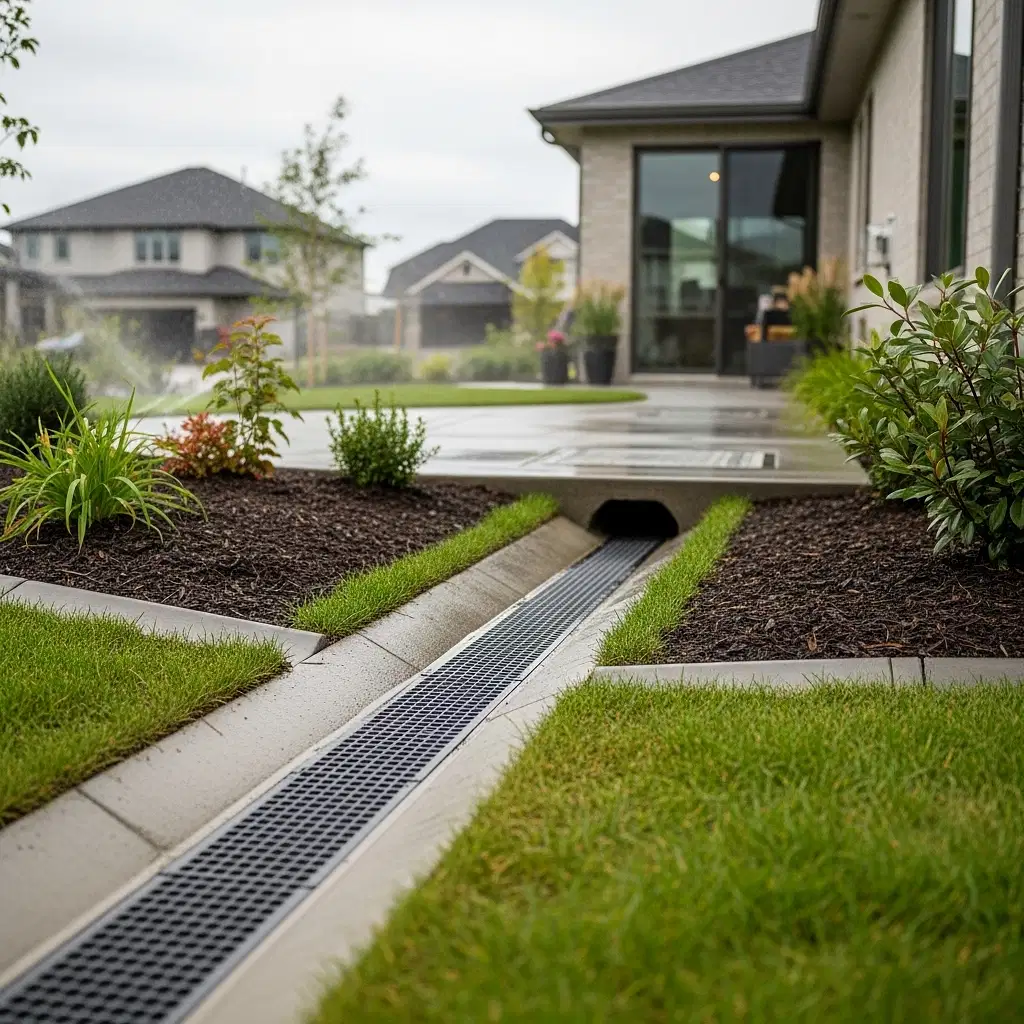
If there is one absolute rule in retaining wall construction, it is that water is the enemy. Getting water away from the wall is just as important as building a strong foundation. This is where many budget installations fail.
Using the correct materials behind the wall is non-negotiable. Using proper backfill drainage gravel behind retaining walls allows water to flow down and away rather than pooling against the stone. We use clear stone gravel because it doesn't compact and block water flow like soil or sand would. Additionally, a perforated drain pipe, often referred to as weeping tile, must be installed at the base of the gravel trench to catch this water and direct it safely away from the structure.
It is also important to consider the overall grading of your yard. If water pouring from your roof's eavestroughs or running down a sloped lawn constantly pools near the top of the wall, even the best drainage gravel will eventually be overwhelmed. A holistic approach to your property's water management is essential for long-term stability and to protect your landscaping investment.
Choosing the Right Structural Materials
When planning a backyard transformation, understanding the nuances of hardscaping vs landscaping elements is crucial for balancing your budget and your vision. Hardscaping elements like structural walls and patios are the bones of your outdoor space, and material choice dictates both aesthetics and longevity.
While interlocking concrete blocks are highly popular because their flexible nature allows them to absorb minor ground movements, poured concrete walls offer a sleek, modern look and incredible structural rigidity. However, rigid structures require even more rigorous foundation and drainage preparation to prevent cracking. Regardless of the material you choose, ensuring your contractor knows how to properly reinforce the structure and safely navigate buried Hydro lines during the excavation process is essential for a safe, beautiful, and lasting result.

The Value of Professional Installation
Many homeowners naturally wonder about the total landscaping cost when planning a major backyard project. While it might be tempting to accept the lowest bid from a quick online search, a failed retaining wall will cost you significantly more to tear down, discard, and rebuild properly. Investing in high-quality materials, thorough excavation, and experienced workmanship upfront adds genuine, lasting value to your home.
At DLV Landscape Construction Inc, we focus on high-end, complete backyard transformations. We differentiate ourselves through owner-operated, on-site project management. When we are on your property, we are personally ensuring that every trench is dug to the right depth, every drainage pipe is laid correctly, and every stone is perfectly placed. We don't cut corners because we build hardscaping features meant to stand the test of time.
If you are planning a major landscaping project in London or the surrounding areas and want the peace of mind that comes from expert craftsmanship, we are here to help. Reach out to us today through our contact us page to discuss your vision, and let's build an outdoor living space that survives the winter and thrives in the summer.